

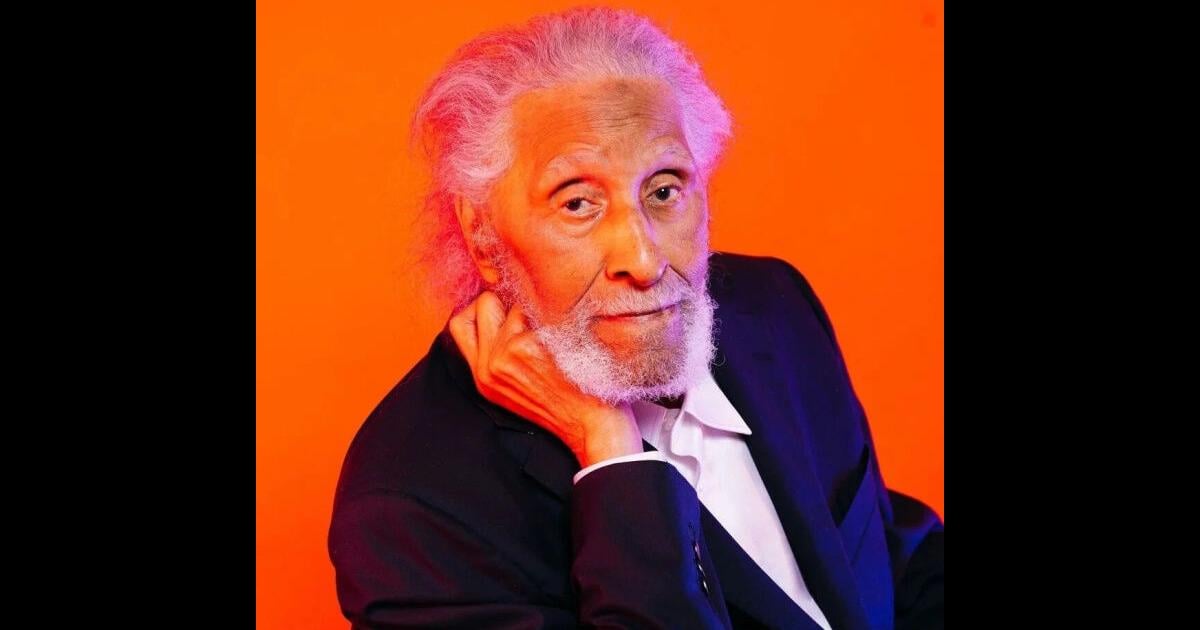

Uplifting.
From a learned scholar to a festival producer, and a legendary musician, the common thread that binds these diverse individuals from various corners of the globe is their shared admiration for the gifts that Sonny Rollins bestowed upon them.
The renowned tenor saxophonist passed away on May 25 at his residence in Woodstock, at the age of 95.
“He was always this very kind, spiritual-thinking person, as well as a fantastic player. ’I try to look for the beauty’ he would say. He was extraordinary in that way,” remembered David Amram, while working his creative musical possibilities around the Langston Hughes poem, “Let America Be America Again” at his farmhouse in upstate New York.
“I first met him in 1955 when I was playing with Charles Mingus, 70 years ago,” said Amram, who has collaborated with some of the greatest musical and literary minds of the 20th century.
Despite the death of his wife Lucille in 2004 – after nearly 40 years of marriage, and being forced to retire his saxophone playing days due to respiratory illness in 2012, Rollins remained in high spirits.
“The last time we spoke was a little over a week ago, on the phone. He said that he was the happiest that he’d ever been in his life. He said it was because it gave him time, every minute of the day and the night to think about the Golden Rule,” Amram said. Rollins explained with his acceptance of the Golden Rule – treating others with the same care in which he himself would like to treated, he found positive action in every effort he made that would bring that same positivity back to him in return.
“He was just so kind to everybody, including myself when I was a newcomer – new to New York and the whole jazz scene – and he encouraged me, as Charlie Parker and Leonard Bernstein did, to use what I learned in my classical works and in my jazz playing,” said Amram, who like Rollins was born in late 1930. Last November, Amram celebrated his 95th birthday with a special concert in Schenectady.
“The schooling we got was basically what I called the University of Hangout-ology,” Amram said. “It wasn’t taught in schools, it wasn’t taught in any one place. You learned the music by spending time with musicians. Eventually, if you had a good enough attitude, they would teach you so much about music, and about living. And he was one of those people who was the guide to everybody.”
Rollins started out on alto saxophone and switched to tenor at the age of 16. He began to follow Charlie Parker and soon came under the wing of Thelonious Monk, who became his musical mentor and guru. The start of the 21st century would see Rollins win his Grammy Awards, election to the American Academy of Arts and Sciences and his securing of the Medal of Arts from President Barack Obama in a White House ceremony.
“He was certainly the last of the generation of what some people regard as one of the golden ages of jazz,” said Benjamin Givan, musicologist with a specialty in jazz and associate professor of music at Skidmore College. Givan is the author of “The Music of Django Reinhardt,” and has written extensively about Rollins.
“In the 1950s when he burst onto the scene, he made a huge impact in terms of performing. He’s basically one of the two most influential tenor saxophone players since World War II, the other being John Coltrane,” Givan said. “As an artist, he encompasses so much: a master improviser with the kind of mind it takes to be able to spontaneously draw on all your knowledge and experience and wisdom and create something that’s meaningful to people in a profound way, and on the spur of the moment.”
Givan can still recall several poignant performances by Rollins he personally attended decades earlier in Portsmouth, New Hampshire, Boston, Massachusetts and New Haven, Connecticut. “The last time I heard him perform live was in 2005 at a concert at the Tanglewood Jazz Festival at Ozawa Hall. It was a very memorable occasion. I just remember him playing a solo on the Irving Berlin song – “they say that falling in love is wonderful.” It just seemed to go on and on, forever. I remember that distinctly.”
Rollins is considered by many as an inspirational figure musically as well as emotionally. “He overcame some very, very difficult circumstances and challenges in his early life,” Givan said.
“By the sheer brilliance of his playing, he was able to turn his life around and was able to become one of the most esteemed artists of his time. It was a matter of personal dedication, hard work, and real vision, so I regard him as a kind of inspirational figure in that way,” said Givan, referencing Rollins’ recognition by the American Academy of Achievement – a nonprofit foundation dedicated to visionaries and pioneers who persevered through setbacks and challenges. “Coming from and awful situation, he mastered his craft, he beat it all and he really turned his life around.”
In his four-decades-long career as a concert promoter and booking agent, Danny Melnick has brought Rollins to stages at the Saratoga Jazz Festival, the Newport Jazz Festival and the JVC Jazz Festival in New York City.
“I produced his 80th birthday concert in 2010 at Boston Symphony Hall. It was an epic experience. He was so lovely and fabulous and kind and still playing at the top of his game – at 80!” Melnick said. “Sonny became this fantastic headliner for us as people recognized he was one of the last men standing of an era and that he was also playing at an unbelievably high level all through those last 10-15 years of his playing life. He was awesome every time I saw him, no matter where he was or what environment he was in, he was just brilliant.”
Melnick said Rollins had a special understanding of entertainment as well as the art form of jazz. “He always had a sense of playfulness and fun, an entertainment value for the audience while he was playing these brilliant improvisations that just wow-ed people to no end,” Melnick said. “He would have thousands of people – all different kinds types of folks and all different ages out there grooving to his music. He had a knack of playing cool music and an understanding that he wanted make people happy and all the while still being Sonny Rollins. And that’s an extremely special gift that he gave to the fans. Such a joy.”
“He was one of the greatest musicians that I ever met,” Amram said. “Jazz players are almost doing their penance on earth, creating beautiful pieces. It makes people everywhere feel something deeper and longer than themselves. Sonny and his music – when you listen to some of his recordings, they’re just so amazing. His compositions are also quite extraordinary and difficult, but he was doing a lot of those things because that’s what he felt he was put here to do,” Amram said.
“I remember when we were driving to the first gig we had together. It was at a college north of the city. He spent the whole time in the car talking about ‘Mr. Miles Davis’ and ‘Mr. Charlie Parker,’ and all of the great band leaders who he heard growing up. A truly humble person in the best sense of word. He always took the time to speak to anybody, and also to speak about the people who influenced him. Modest, genuine, just here for a while to put something back – like Dizzy Gillespie used to say, to put something back into the pot. And Sonny was very much the same school,” Amram said.
A post on Rollins’ official website this week noted the passing of “the saxophone colossus” and carried a quote attributed to Rollins that read: I think when the creative person ends, he continues in the next existence. I’m a person who believes this life isn’t the be-all and end-all of everything. A spiritual person doesn’t feel like that.
“Sonny was a great educator for anybody he crossed paths with and he always stayed true to what he wanted to do. Rather than trying to play like everybody else, almost everybody else tried to play like him,” Amram said. “That spiritual part of him – there’s an awareness of his gifts as an amazing artist who just did what he did because that’s that’s what he felt he was put here to do.”



I disagree with that statement. Sonny Rollins was definitely a great musician, but I wouldn’t say he’s the best I’ve ever known.
I disagree with that statement. Sonny Rollins was a talented musician, but calling him the best ever seems like a stretch.
Üsküdar Garantili Su Kaçağı Tespiti Banyoda seramik kırmadan kaçağı tespit ettiler. Buna gerçekten çok sevindim. https://ptatmb.com/
Well-written article. As remote work becomes more common, ONLINE PROFESSIONAL JOBS are becoming an attractive option for skilled professionals seeking career growth
https://shorturl.fm/SG5TT
https://shorturl.fm/xcCu6
https://shorturl.fm/OLJ0v
Grsat blog! Is yoour theme customm made oor didd you
doownload iit freom somewhere? A desiugn loke yours with a few simpke adjustments woupd really mawke myy bog jump out.
Plesse lett me know wherre yyou got yojr design. Manny thanks
https://shorturl.fm/HNWEw
chơi cá cược tại 98win quay hũ ăn 100% cam kết có lời
trò chơi 58win đẳng cấp số 1 thế giới hàng đầu thế giới
Gần đây mình hay đọc nội dung tại https://fly88.tel/, thấy cập nhật khá nhanh.
https://shorturl.fm/uMNJb
Top notch service and very responsive support team. It’s rare to find a site this reliable these days. Give idug234 a try!
I love how I can bet anytime and anywhere. The 24/7 availability is perfect for my schedule and the odds are quite competitive. kr247bet
Feeling lucky today and this site made it even better. The bonus offers are actually generous compared to others. Shoutout to phsvip777 for the win.